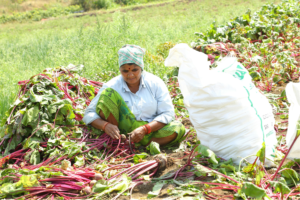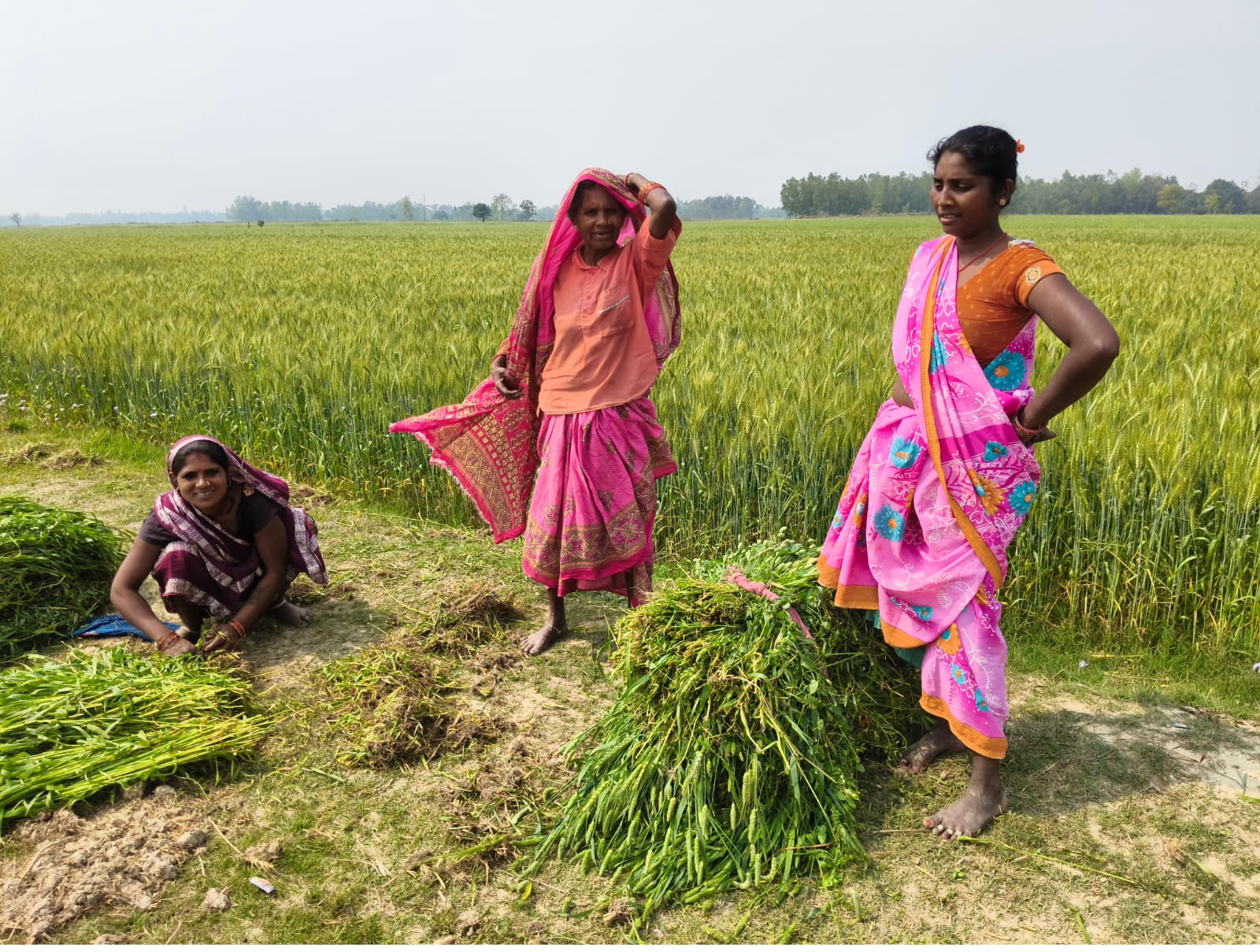
Across rural India, countless women work alongside men in fields every day, often contributing equally and sometimes carrying the larger share of responsibility. They sow, harvest, and manage farms, especially during periods of male migration.
The numbers tell an important story. According to the Agriculture Census 2015–16, women operate about 12% of the total agricultural land in India. Yet their participation in agricultural labour is far higher. Recent data from the Periodic Labour Force Survey 2023–24 shows that about 77% percent of rural women workers are engaged in agriculture, compared to about 50% of rural men. Overall, around 80% of economically active women in India are employed in agriculture, and women make up 64% of India’s total agricultural workforce. This highlights the central but often unrecognised role women play in the country’s farming systems.
As more rural men migrate to cities in search of employment, women are increasingly managing farms and agricultural tasks on their own. Yet they remain largely invisible in conversations about agriculture, technology adoption, and farming policy. This gap not only affects women’s agency but also has direct implications for farm productivity, household resilience, and the effectiveness of climate-focused agricultural investments.
One of the biggest reasons for this invisibility is land ownership. In India, land represents status, security, and access to institutional support. Yet only around 13% of landholdings belong to women. Without land titles in their name, many women farmers are unable to access credit, government schemes, or relief measures during climate shocks such as droughts or unpredictable rainfall. As climate risks increase, women farmers often face the greatest vulnerability.
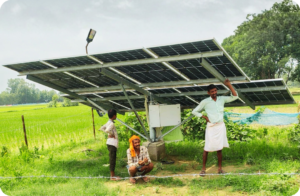
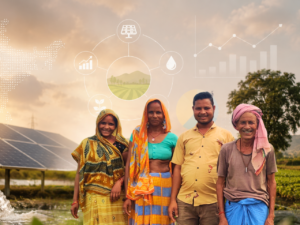
At Oorja, we have seen firsthand how recognising women as farmers can strengthen both agricultural systems and rural livelihoods. Oorja provides solar-powered irrigation and climate-smart farming advisory to smallholder farmers in Uttar Pradesh through a shared, pay-per-use service model. Instead of requiring farmers to purchase expensive irrigation equipment, Oorja installs and operates community-level solar irrigation systems and provides water on demand. Farmers pay only for the water they use, while Oorja manages maintenance, monitoring, and customer support.
This model addresses several barriers that women farmers face. In many villages, agricultural services are tied to land ownership or require upfront investment. Since land is often registered in the names of male family members, women are excluded from accessing these services directly. Oorja removed land ownership as a requirement for accessing irrigation services, allowing women farmers to register and participate independently.
Reliable solar irrigation also reduces everyday burdens. Unlike diesel pumps, solar systems eliminate the need to handle fuel or depend on external operators. Farmers can access water when they need it, making irrigation more predictable and manageable. According to Oorja’s 2024 annual impact assessment conducted by 4th Wheel Social Impact, 73% of women members reported that solar-powered irrigation made it easier to manage irrigation independently when male household members were absent.
Beyond irrigation, Oorja invests in strengthening farmers’ capabilities. Over the years, Oorja has trained more than 2,500 smallholder farmers, including women, on modern and sustainable agronomic practices. These trainings help farmers improve yields, diversify cropping patterns, and take advantage of additional growing seasons made possible by reliable irrigation.
Today, 20% of Oorja’s irrigation users are women farmers, and this number continues to grow. The organisation aims to reach 30% women customers by 2030.
Progress is gradual, particularly in regions where social norms still shape who is recognised as a farmer. Women often face barriers such as limited access to education, financial services, and formal decision making spaces. Oorja continues to work toward reducing these barriers through inclusive service design, training initiatives, and local engagement.
This experience highlights an important lesson for climate-resilient agriculture. Sustainable farming cannot be achieved without addressing the structural inequalities that women farmers face. When women gain access to reliable irrigation, knowledge, and markets, they are better able to manage farms, respond to climate variability, and strengthen household livelihoods.
Women are not silent participants in agriculture. They are central to its future. Recognising and supporting women farmers is essential not only for gender equality, but also for building a more resilient and sustainable agricultural system.
Written by Argha Ghose, Communications Associate at Oorja.