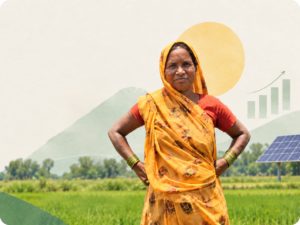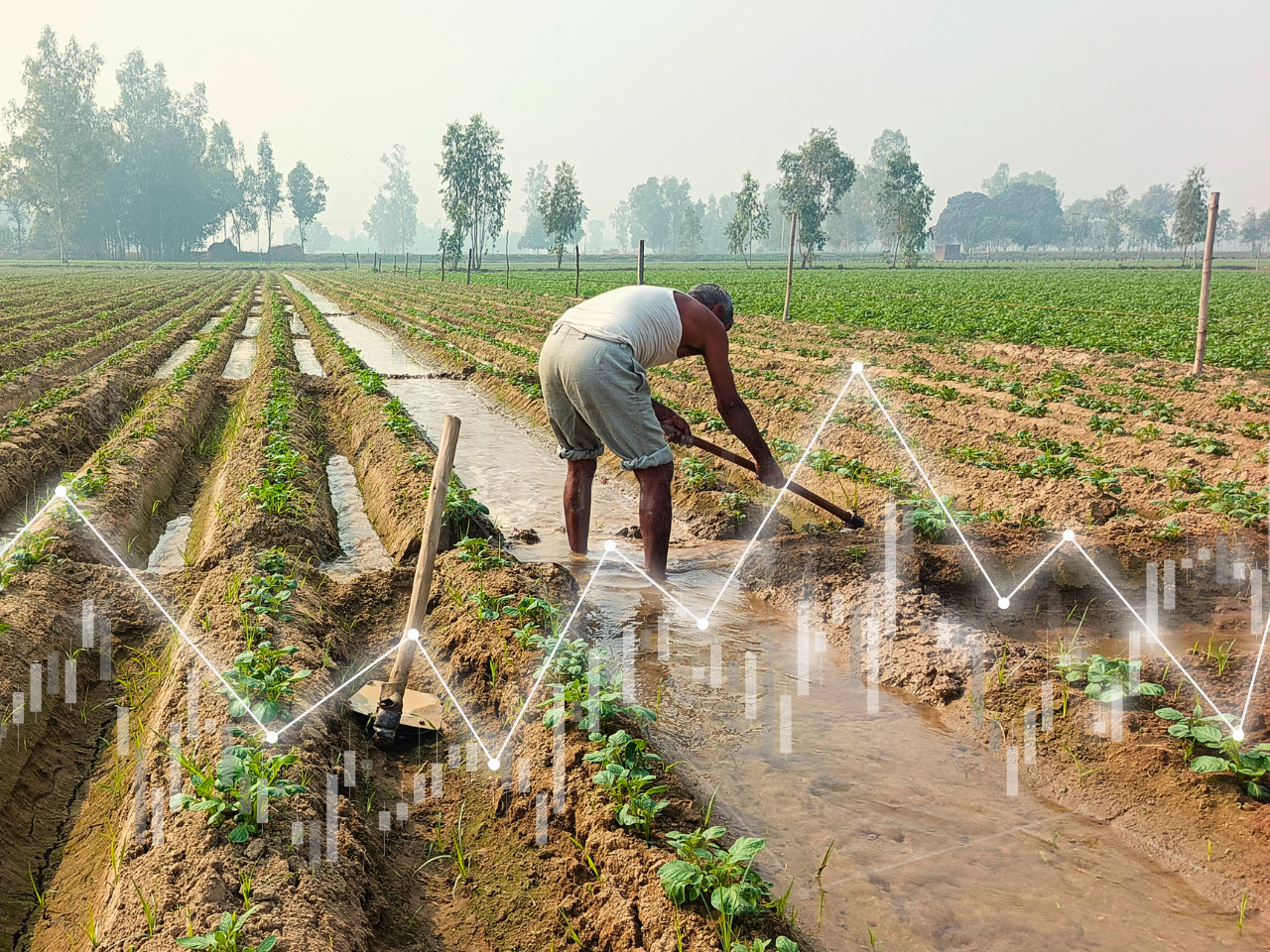
For most of India’s 140 million farming households, irrigation has historically come down to one of two choices: wait for the monsoon, or spend money they can barely afford on diesel. Neither is a solution. Both are symptoms of a deeper structural gap in a farming economy that has long operated without the information it needs to make better decisions. At Oorja, we believe that the gap is closing through the convergence of data-driven agriculture and clean energy.
The Scale of the Problem
India is an agricultural nation by every meaningful measure. Agriculture contributes approximately 18 to 20% of the national GDP and supports the livelihoods of more than half the country’s population [1]. Yet the sector has historically operated at a significant disadvantage: unpredictable water access, high input costs, unreliable power supply, and almost no real-time information to guide decisions.
Irrigation sits at the heart of this challenge. Around 55% of India’s farmland is irrigated today, supported in part by government programmes such as the Pradhan Mantri Krishi Sinchayee Yojana (PMKSY) [2]. A large share of that irrigation is powered by diesel or electricity, both of which are expensive, polluting, and unreliable in rural settings. Agricultural electricity consumption in India is significant: approximately 70% of the electricity used in the sector goes toward pumping groundwater [3]. State governments heavily subsidize this electricity, which strains distribution companies (discoms) and rarely translates into water efficiency at the farm level [4].
The smallholder farmer caught in this system has very little room to maneuver. Diesel costs eat into already thin margins. Power cuts disrupt irrigation timing. And without data, every decision about when to water, how much, and for how long remains essentially a guess. This is what makes the convergence of data and clean energy not just relevant, but necessary.
What Convergence Actually Means
The phrase “data-driven agriculture” has become something of a buzzword in agritech circles. At its core, however, it describes something simple and powerful: replacing guesswork with evidence at every stage of the farming cycle.
When a soil sensor tells a farmer that moisture is already at 46%, there is no need to run the pump [5]. When weather data predicts rain within 48 hours, irrigation can be deferred. When historical pump performance flags an anomaly in flow rate, maintenance can be scheduled before a breakdown disrupts the crop cycle. None of these decisions require a data scientist. They require a system that collects the right information, processes it reliably, and delivers actionable insight in the right language, in a form that is understandable, timely, and usable at the field level. IoT-based tools including wireless sensors, mobile applications, and cloud platforms are already empowering farmers with real-time insight into soil moisture, weather conditions, and crop water needs [6].
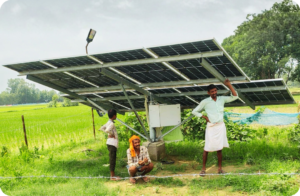
The energy dimension of this convergence is equally significant. Solar-powered irrigation removes the two biggest barriers to consistent water access: the cost of diesel and the unreliability of grid power [7]. But solar alone, without intelligence layered on top of it, simply replaces one inadequate system with another. The real value is unlocked when clean energy infrastructure is paired with data systems that optimize how, when, and how much water is used.
Why Solar Is the Foundation
India’s smart agriculture market was valued at USD 714 million in 2024 and is projected to reach USD 3.8 billion by 2033, growing at a CAGR of over 20%. Much of that growth is being driven by the adoption of precision irrigation and IoT-enabled farm management [8]. It reflects genuine demand for technology that works in real rural conditions, not just in controlled pilots.
The economics of solar irrigation are compelling. Studies on solar irrigation pumps (SIPs) in South India found that average profitability from crops irrigated using SIPs reaches approximately Rs. 1,08,434 per acre per annum, against a capital cost of Rs. 2,42,303 for a 5 HP pump without subsidy. This means farmers can recover the full capital cost within three years from crop income alone [3]. When subsidies under schemes like PM-KUSUM are factored in, the case for adoption strengthens further.
Research tracking solar pump adoption across districts in Rajasthan found that it reduced diesel consumption by 50 to 106% in participating areas, while simultaneously increasing cropping intensity by 2 to 10% and expanding the area under high-value fruits and vegetables by as much as 12 to 116% in some districts [9]. Annual profits for solar pump adopters were found to be 3 to 76% higher than those of comparable non-adopters, depending on the region.
The benefits, however, extend well beyond cost savings. Solar irrigation gives farmers something they have rarely had: reliable, predictable access to water [7]. That predictability changes behavior. Farmers irrigate on time rather than under stress. They grow more water-sensitive, higher-value crops. They plan across seasons rather than reacting week to week. This shift from reactive to planned farming is, in essence, the beginning of data-driven agriculture at the field level, even before a single sensor is deployed.
Oorja’s Approach: Irrigation as a Service
The challenge with most clean energy and precision agriculture solutions is that they assume the farmer is also a financier. The upfront capital cost of solar pumps, sensors, and connectivity infrastructure is simply beyond the reach of most smallholder farmers. Low adoption of smart irrigation technologies among smallholders is directly attributed to high initial capital investment, limited digital literacy, and insufficient access to technical support [6].
Oorja addresses this through the Irrigation as a Service (IaaS) model. Rather than asking farmers to purchase and maintain equipment, Oorja delivers irrigation as a pay-per-use service: reliable, solar-powered water access with no capital outlay required from the farmer. The model is designed within the EASY framework, which stands for Equitable, Affordable, Sustainable, and Yield-driven.
Oorja currently operates more than 320 pumps across six districts in Uttar Pradesh: Hardoi, Bahraich, Barabanki, Lucknow, Sitapur, and Lakhimpur. To date, the programme has served 5,433 farmers, irrigated 5,802 acres of agricultural land, and delivered over 8.15 million cubic metres of water. In doing so, it has saved an estimated 2,77,940 litres of diesel and prevented approximately 6,360.8 tonnes of CO2 from entering the atmosphere.
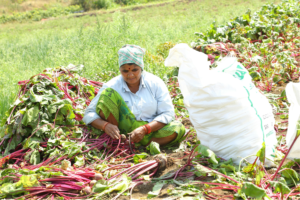
These results are grounded in Uttar Pradesh’s mint belt, where Oorja has focused much of its early operations. India is the world’s largest producer of mint, with 75% of cultivation concentrated in Uttar Pradesh, making reliable irrigation especially consequential for farmer incomes in this region [10]. The shift from diesel-powered pumping to solar-based IaaS has reduced irrigation costs substantially, improved productivity for water-sensitive crops, and created new livelihood pathways for rural youth trained as pump operators and service entrepreneurs.
A third-party impact evaluation conducted by the 4th Wheel found that among Oorja’s user base, 30% of farmers reported a decrease in the cost of cultivation, 41% reported a reduction in the cost of irrigation, 89% reported a positive change in income perception, and diesel use fell by 47% on average. These are not projections. They are outcomes measured on the ground, among real smallholder farmers in one of India’s most agriculturally significant states.
Oorja retains ownership and maintenance responsibility for all solar irrigation assets. This ensures the system continues to function reliably beyond the initial project period, protecting farmers from the equipment failure risks that have historically undermined rural technology deployments [10].
Where Data Enters the Picture
The Oorja model creates the infrastructure for the next layer of value: data.
Every irrigation event is a data point. Number of active users, volume of water consumed in cubic metres, crop type, irrigation frequency, pump runtime: collected systematically across thousands of farmers and six districts, this data begins to paint a detailed picture of how water is actually being used at the field level.
At Oorja, our data analysis work focuses on extracting both operational and agronomic insights from this information. On the operational side, we track pump performance, service delivery patterns, and utilization rates across our network, allowing us to identify inefficiencies, anticipate maintenance needs, and optimize service delivery at scale. On the agronomic side, we are working toward integrating irrigation data with crop-stage information and local weather patterns to develop advisory models that can help farmers irrigate more precisely, reducing both water use and crop stress.
This is not theoretical. Field deployments of IoT-based sensor networks have demonstrated real-time monitoring of irrigation water volume, flow rate, and pressure, with soil moisture tracked across multiple depths, enabling automated, responsive irrigation that measurably improves water use and yield outcomes [5]. The challenge in the Indian smallholder context has always been making such systems affordable and interpretable. That is exactly where Oorja’s service model and local delivery network become relevant.
Food, Water, and Energy as One System
One of the most important insights to emerge from research on solar irrigation in India is that water, energy, and food security cannot be managed independently. They are parts of the same system, and decisions made in one domain ripple across the others.
Groundwater irrigation in India is estimated to account for 8 to 11% of total national greenhouse gas emissions [11]. Unmetered, subsidized electricity for irrigation has historically encouraged overextraction of groundwater, a pattern particularly acute in Punjab and Haryana [4]. Solar irrigation, by reshaping the economics of water use, creates conditions for more sustainable groundwater management. But this only holds true when solar is paired with data systems that make water use visible, measurable, and accountable.
Research argues that solarisation-driven energy transition in agriculture carries several spillover benefits beyond cost savings: improved food security, stronger livelihoods, especially for small and marginal farmers, and a meaningful contribution to climate resilience and adaptation [12]. India’s agricultural sector is the country’s third-largest consumer of electricity [4]. Making that consumption visible and intelligent, rather than subsidized and opaque, is one of the most structurally important contributions that data-driven agriculture can make.
This is the deeper significance of the energy-agriculture convergence that Oorja is participating in. By providing solar-powered irrigation as a measurable, data-generating service, we are building, for the first time, a granular record of how water is actually being used at the farm level across a meaningful number of smallholders. That data is valuable not only for optimizing our own operations, but for informing the broader ecosystem: policymakers designing water regulation, banks assessing agricultural credit risk, insurance companies modelling crop outcomes, and researchers tracking the long-term impact of clean energy on food production.
Way Forward
The Indian government’s push through PM-KUSUM, the Dhan-Dhaanya Krishi Yojana, and the broader green manufacturing initiative signals strong policy alignment with the direction Oorja has been moving [13]. The Union Budget 2025 to 26 reinforced this by calling agriculture the first engine of development and announcing incentives for solar PV cell manufacturing, directly strengthening the economic case for solar-powered irrigation [13].
The enabling environment for solar irrigation is improving. The cost of solar panels continues to fall. Digital connectivity in rural India is deepening. And the business case for IaaS models, which remove upfront capital barriers while creating recurring, data-rich service relationships, is becoming clearer with each season of operation.
What Oorja is building is not simply an irrigation company. It is a data infrastructure for the rural agricultural economy, one that begins with reliable, affordable water access and builds layer by layer toward a fully information-enabled smallholder farming system.
The convergence of clean energy and data intelligence in agriculture is not a distant vision. It is already happening across the six districts we serve in Uttar Pradesh, in 5,433 farmers’ fields, across 5,802 acres of irrigated land. As we collect more data, learn more from it, and develop the analytical tools to apply it in the field, the compounding returns will become increasingly visible: in yield, in income, in water sustainability, and in the long-term resilience of the communities we work with. The field has always been where India’s food security is won or lost. Now, for the first time, it is also where its data story is being written.
Bibliography
[1] Farmonaut. (2025, August 15). Agriculture of India: 2025 Smart Farming Innovations. Farmonaut Blog. https://farmonaut.com/asia/agriculture-of-india-2025-smart-farming-innovations
[2] IndiaDataMap. (2025, November 3). State-wise Irrigated Land Area in India 2025. India Data Map. https://indiadatamap.com/2025/08/19/state-wise-irrigated-land-area-in-india-2025/
[3] Narayanamoorthy, A., et al. (2025). Solar-powered irrigation pumps in South India: Do farmers really benefit? Water Policy, 27(11), 1293. IWA Publishing. https://iwaponline.com/wp/article/27/11/1293/109897/Solar-powered-irrigation-pumps-in-South-India-do
[4] International Institute for Sustainable Development (IISD). (2024). Solarizing Irrigation in India. IISD Project Overview. https://www.iisd.org/projects/solarizing-irrigation-india
[5] Meric, et al. (2025), as cited in: Ayaz, M., et al. (2025). Smart irrigation systems in agriculture: An overview. Computers and Electronics in Agriculture. ScienceDirect. https://www.sciencedirect.com/science/article/abs/pii/S0168169925011147
[6] Ayaz, M., et al. (2025). Smart irrigation systems in agriculture: An overview. Computers and Electronics in Agriculture. ScienceDirect. https://www.sciencedirect.com/science/article/abs/pii/S0168169925011147
[7] SMS Foundation. (2025, September 30). Farmers Transforming Agriculture with Solar-Powered Irrigation. https://www.smsfoundation.org/farmers-transforming-agriculture-with-solar-powered-irrigation/
[8] IMARC Group. (2024). India Smart Agriculture Market Size and Share Analysis 2034. IMARC Research Report. https://www.imarcgroup.com/india-smart-agriculture-market
[9] Durga, N., and Gaurav, S. (2023). Energy Transition in Irrigation: India’s Trysts with Solarisation of Irrigation. SSRN Working Paper. https://papers.ssrn.com/sol3/Delivery.cfm/b6a76a8f-c496-4dea-bf7b-525f81cc414f-MECA.pdf?abstractid=4419044&mirid=1
[10] Rural21 / UN FAO. (2024). “Solarpreneurs”: Powering Irrigation in Rural India. Rural21 International Journal for Rural Development. https://www.rural21.com/english/news/detail/article/solarpreneurs-powering-irrigation-in-rural-india.html
[11] Welthungerhilfe / Global Food Journal. (2023). How Solar Power is Transforming Irrigated Agriculture. Welthungerhilfe. https://www.welthungerhilfe.org/global-food-journal/rubrics/agricultural-food-policy/how-solar-power-is-transforming-irrigated-agriculture
[12] Durga, N., and Gaurav, S. (2023). Energy Transition in Irrigation: India’s Trysts with Solarisation of Irrigation. SSRN Working Paper. (See [9] above.)
[13] Oxford Policy Management (OPM). (2025). Can Micro Solar Water Pumps Transform Small-Scale Agriculture in India? OPM Insights. https://www.opml.co.uk/insights/can-micro-solar-water-pumps-transform-small-scale-agriculture-india
Written by Gunjan Kohli, Project Associate (Data Analysis) at Oorja