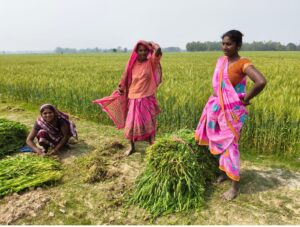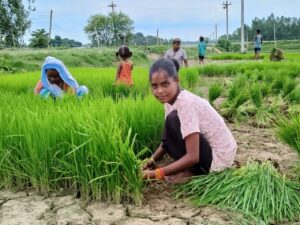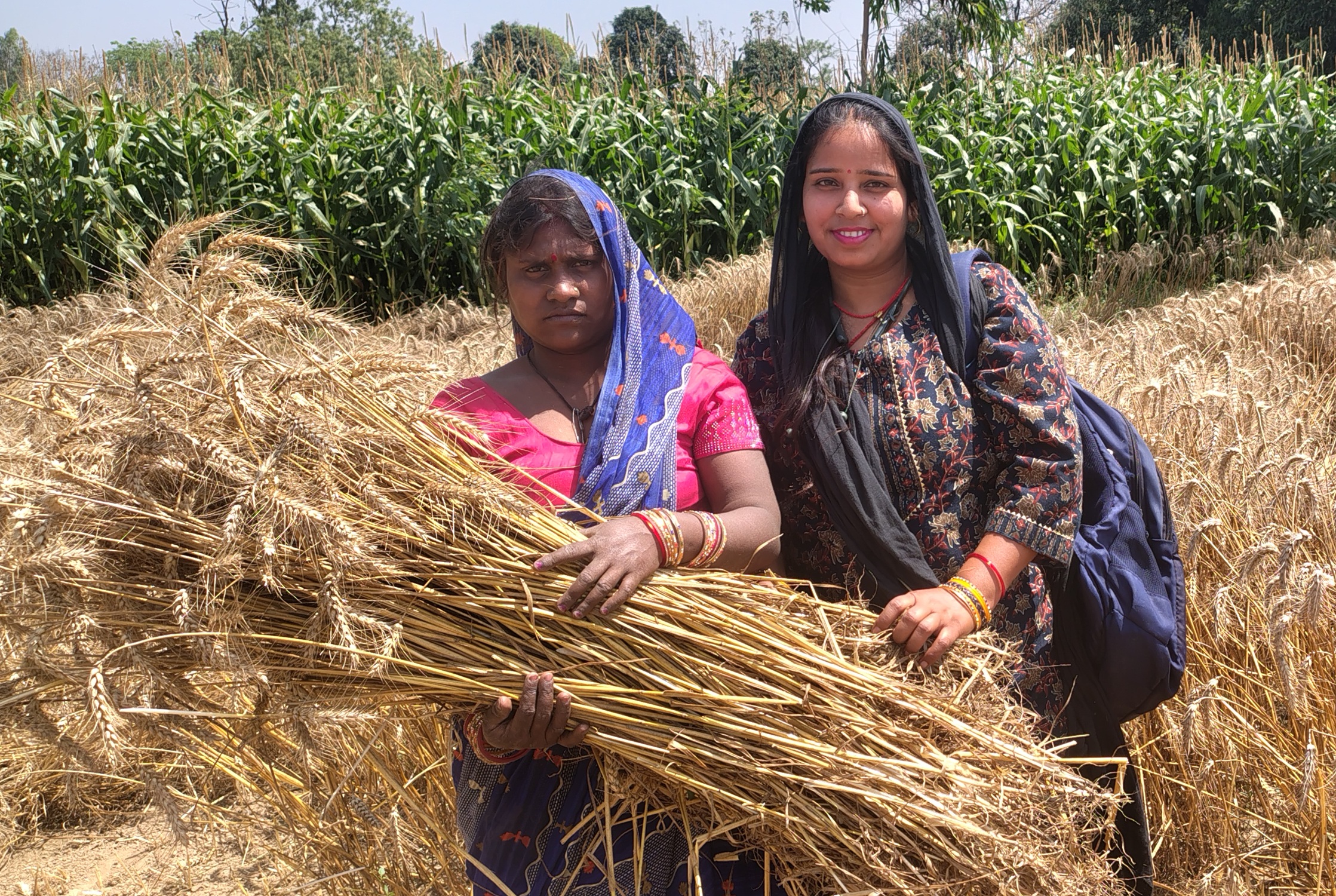
When we think of farming, we picture sprawling green acres of land. But reality is far from this truth in India.
According to the Agriculture Census 2015-16 in India, 86.1 percent of farmers are small and marginal (SMF). Essentially, this means that they have a landholding size smaller than two hectares.
It is striking to note that almost half of India’s agricultural land actually lies with SMF. The census shows that about 47.3 percent of operational land is with them. In 1970-71, this number was about 21 per cent.
It is crucial to keep in mind these 47.3 percent of farmers, whose stories and struggles are often missed out on when we talk about agricultural reforms and policies in India.
Green Revolution: Progress, but not for everyone
We can’t talk about the progress India made in agriculture without discussing the Green Revolution.
The story begins in the 1960s, when droughts and lack of adequate rainfall had caused a major drop in India’s agricultural outputs. Food was scarce and the number of mouths to feed was vast. Desperate, India was forced to rely on external aid, importing close to 10 million tonnes of wheat from the United States to fill this gap.
Recognising the need to make drastic changes, India decided to participate in the Norman Borlaug-conceptualised Green Revolution, which was designed to help nations expand their yield and agricultural outputs.
The shift comprised a reliance on an advanced industrial system. This meant farmers had to make use of adopted technologies like high-yielding variety (HYV) seeds, mechanised farm tools, irrigation systems, pesticides, and fertilisers.
Through such seeds, India saw her agricultural yield multiply. In some cases, within a year, the output grows by five million tonnes more.
The country was moving from a state of dependency to self-sufficiency – which is all India wanted at that time. A combination of bio-engineered seeds, high use of fertilisers and heavy irrigation was used to increase the yield of the crops. The technology bore fruit, especially for wheat and rice cultivation in the country, proving to be beneficial in many states in India.
While we generally paint a story of success with the Green Revolution, the reality is that not every farmer reaped rewards from it. In fact, only those farmers with abundant resources and land could benefit, which only increased the already existent gap between wealthy and poor farmers.
A look at the number of states where the Green Revolution worked well shows that the states of Punjab, Haryana, Uttar Pradesh, Andhra Pradesh and Telangana were where the maximum changes were seen.
But largely missing from the success were small and marginal farmers, who make up more than half of the whole farmer population in the country.
Though initially effective, the Green Revolution technologies were expensive and required large swathes of land so that the yield was maximised. This automatically eliminated a big group of farmers, who did not have the resources to shell out three to four times more money in order to afford the high-yielding seeds or extra irrigation and chemicals to support the growth of such seeds.
Historically, India’s social structures have disabled poor farmers from acquiring wealth, be it through the zamindar system or property relations or lack of government support for small farmers.
The situation today
Today too, small and marginal farmers continue to be at the receiving end of unfair treatments. With climate change and unpredictable weather events on the rise, the impact has been felt by over 60 per cent marginal farmers, according to a recent report.
With the looming climate crisis, Indian farmers are facing losses in yield – which poses a threat to the state of food security India has achieved with great difficulty.
What’s worse, the report reveals that just 30 percent of marginal farmers surveyed had access to crop insurance and only 25 percent received timely financial credit.
The lack of monetary resources has in the past already caused SMF to miss out on agricultural advancements. Which is why, we at Oorja, are trying to make sure the same does not happen again today.
Small farmers do not own the means to acquire greener agricultural assets, such as solar-powered irrigation pumps. But through our pay-per-use model, they can still benefit from a more sustainable technology, while getting a steady supply of water to ensure a good crop yield. This means users pay according to the amount of irrigation water pumped, making it a much more affordable tariff for them.
Moreover, our farmer advisory services aim to help them adopt more modern techniques of farming, which can help them move from growing just staple crops to high-value crops. For instance, in 2023, we saw an increased adoption of scientific farming techniques like the System of Rice Intensification (SRI) which resulted in better yields as compared to the traditional method of rice cultivation leading to income increase for the adopters.
Currently, 29,000 farmers have benefitted from our services. Our goal is to reach one million farmers globally by 2030. It is no small feat but for the sake of India’s small and marginal farmers, we don’t mind dreaming big.
Author: Simran Ahuja (former Social Media Intern at Oorja)